Learning Objectives & Key Takeaways
0 / 4 Completed- Understand Agentic AI - LangChain, LangGraph, LangSmith, LangFlow and n8n core architecture and runtime execution model
- Audit real-world latency, throughput benchmarks, and memory footprint
- Implement zero-downtime deployment patterns with resilience guards
- Verify code snippets and architect blueprints against production SLOs
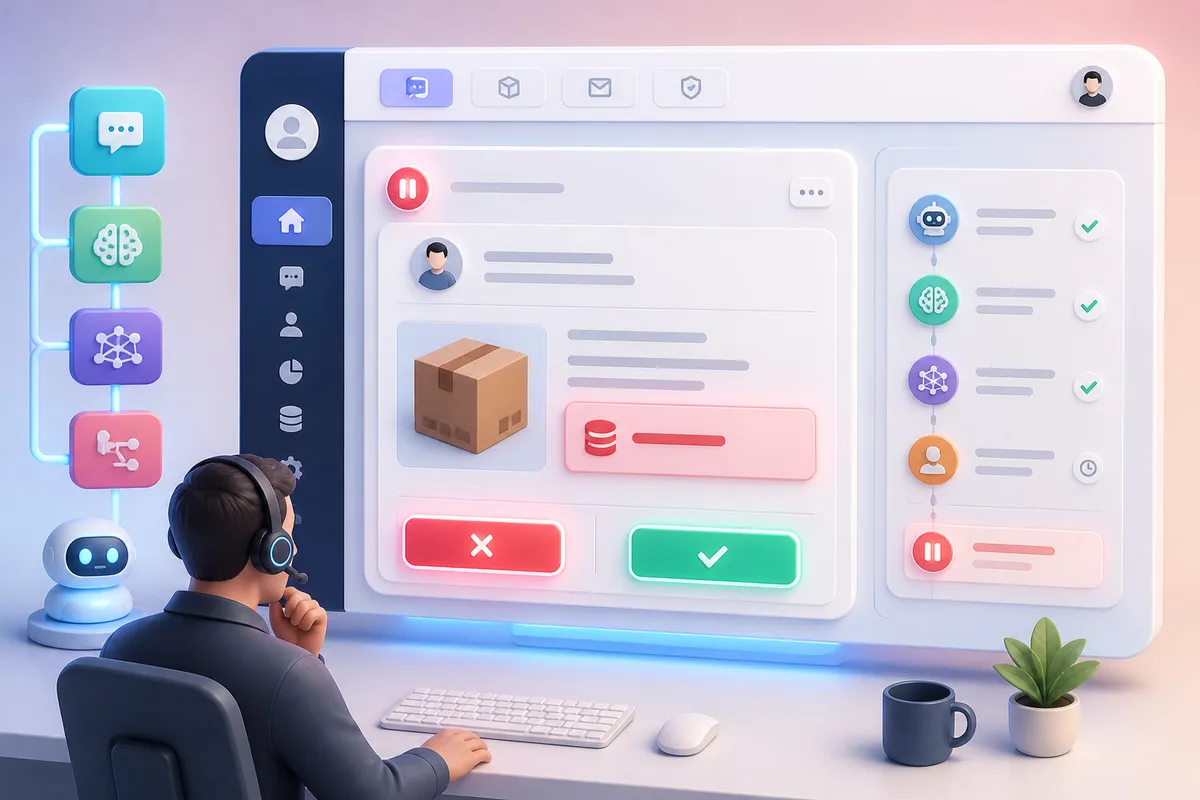
- A LangGraph state machine can pause mid-refund with interrupt() and resume later with Command once a human decides.
- Checkpointers make human-in-the-loop safe because a resumed node restarts from its beginning, so side effects must come after approval.
- n8n is the right place for store and payment connector calls, keeping LangGraph focused on decisions, not HTTP plumbing.
- LangSmith online evaluators catch threshold-routing bugs and rejected-but-refunded-anyway cases before customers notice.
- Durability mode matters: async is fast but can lose the last write, sync is safer for approval-critical steps.
Description
A mid-size fashion e-commerce company processes around four thousand return requests a week. Customer support agents manually check order history, verify payment status, apply return policy rules, and then issue refunds through the payment dashboard, a process that takes six to nine minutes per ticket during peak sale days.
Management wants automation, but the finance team is nervous because a bad refund bot could auto-approve large payouts with no human check, or worse, double-refund the same order if a step reruns after a crash.
- Topic summary
- The workflow
- Building the agent
- Automating and observing it
- Solving the real problem
Checking your membership…
Members read every Tech Buzz story in full, with code examples, audio and the discussion, plus every course, quiz and interview set in the Learning Dashboard.
Stop Following Tutorials: Build These 5 Backend Projects Instead
 Agentic AI•1 min read
We Cut a ₹41 Lakh AWS Bill to ₹16 Lakh Without Losing a Single Feature
 AWS & DevOps•10 min read

MCB Editorial
Tech Buzz Daily Desk. Contributing deep-dive engineering architectures, cloud paradigms, and system design insights to Master Class Buddy.