Learning Objectives & Key Takeaways
0 / 4 Completed- Understand Next.js 16 & React 19 core architecture and runtime execution model
- Audit real-world latency, throughput benchmarks, and memory footprint
- Implement zero-downtime deployment patterns with resilience guards
- Verify code snippets and architect blueprints against production SLOs
- useActionState gives you pending state and a serializable result without manual useState wiring.
- Server Actions must validate and authorize on the server since client checks never secure a mutation.
- useOptimistic shows a guess immediately, then React swaps in the real value after the Action settles.
- Sharing one pure reducer between client and server keeps optimistic and authoritative state from diverging.
- React 19 resets forms automatically after a successful action, so plan your optimistic state accordingly.
The Ticket That Closed Itself, Twice
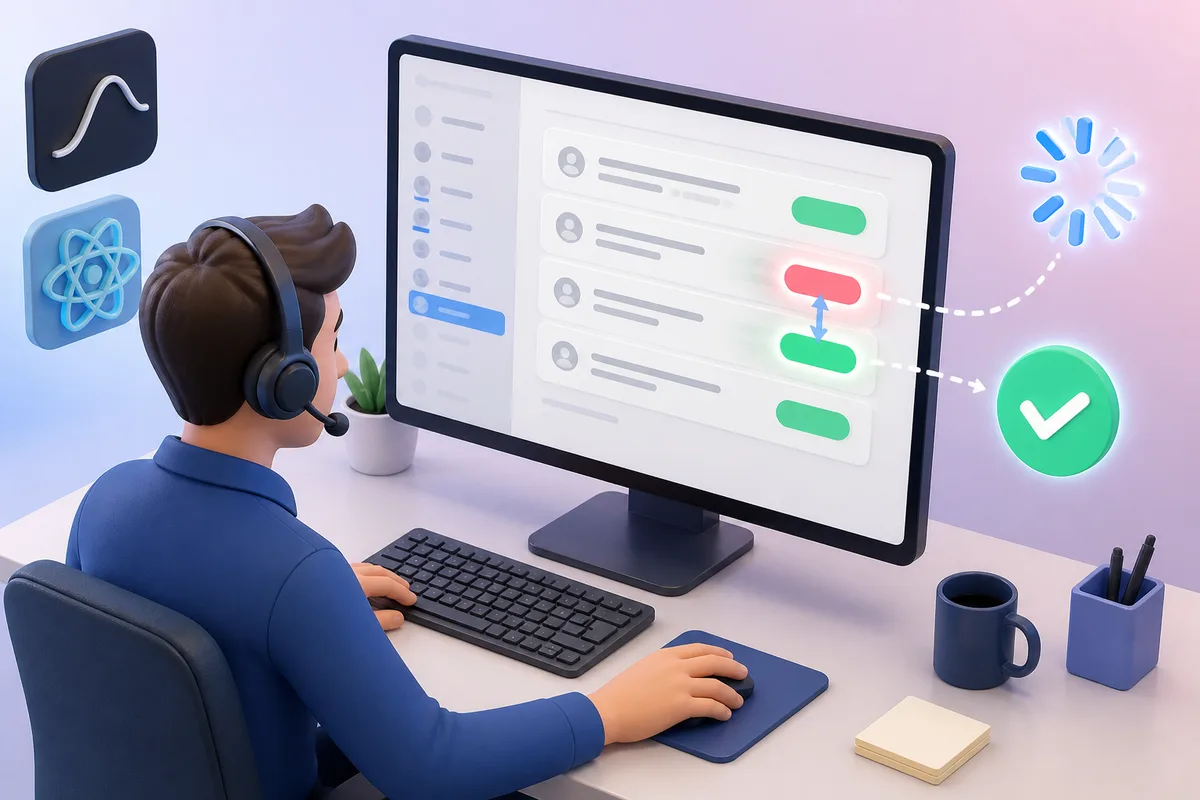
Our internal support tool let agents mark tickets resolved with a single button click, and the UI updated instantly so agents could move to the next ticket without waiting. The problem showed up during a backend outage window when the mutation silently failed but the button already showed resolved, and agents kept working through a queue that the database still considered open.
By the time someone noticed, forty two tickets were marked closed in the UI but still open on the server, and customers kept replying to tickets nobody was watching. The root cause was a hand rolled optimistic update using plain useState, with no reliable way to know when the request actually finished or failed.
- Why Actions Exist: The Three Jobs Every Form Mutation Needs
- Building The Resolve Button With useActionState
- Adding The Instant Preview Without Lying To The Queue
- Pitfalls That Show Up After The Demo Looks Perfect
- What To Carry Into Your Next Form
Checking your membership…
Members read every Tech Buzz story in full, with code examples, audio and the discussion, plus every course, quiz and interview set in the Learning Dashboard.