Narrated by Study Buddy Narration
Voiceover Engine • Interactive Audio Sync
0:0010:00
Learning Objectives & Key Takeaways
0 / 4 Completed- Understand Kubernetes & Docker core architecture and runtime execution model
- Audit real-world latency, throughput benchmarks, and memory footprint
- Implement zero-downtime deployment patterns with resilience guards
- Verify code snippets and architect blueprints against production SLOs
Architecture Ready
100%
What you will learn
- HPA changes replica count based on metrics like CPU, memory, or external signals through autoscaling/v2.
- VPA changes CPU and memory requests on existing pods and needs Metrics Server plus its own add-on install.
- HPA and VPA solve different problems and can conflict if both manage CPU-based requests on the same workload.
- Scale-to-zero with HorizontalPodAutoscaler needs minReplicas 0 and a metric that stays visible while the workload is idle.
- Event-driven scaling for queues and streams is a distinct pattern from CPU-based HPA, even when the exact tool details need verifying against current docs.
The Sale That Broke Our Assumptions
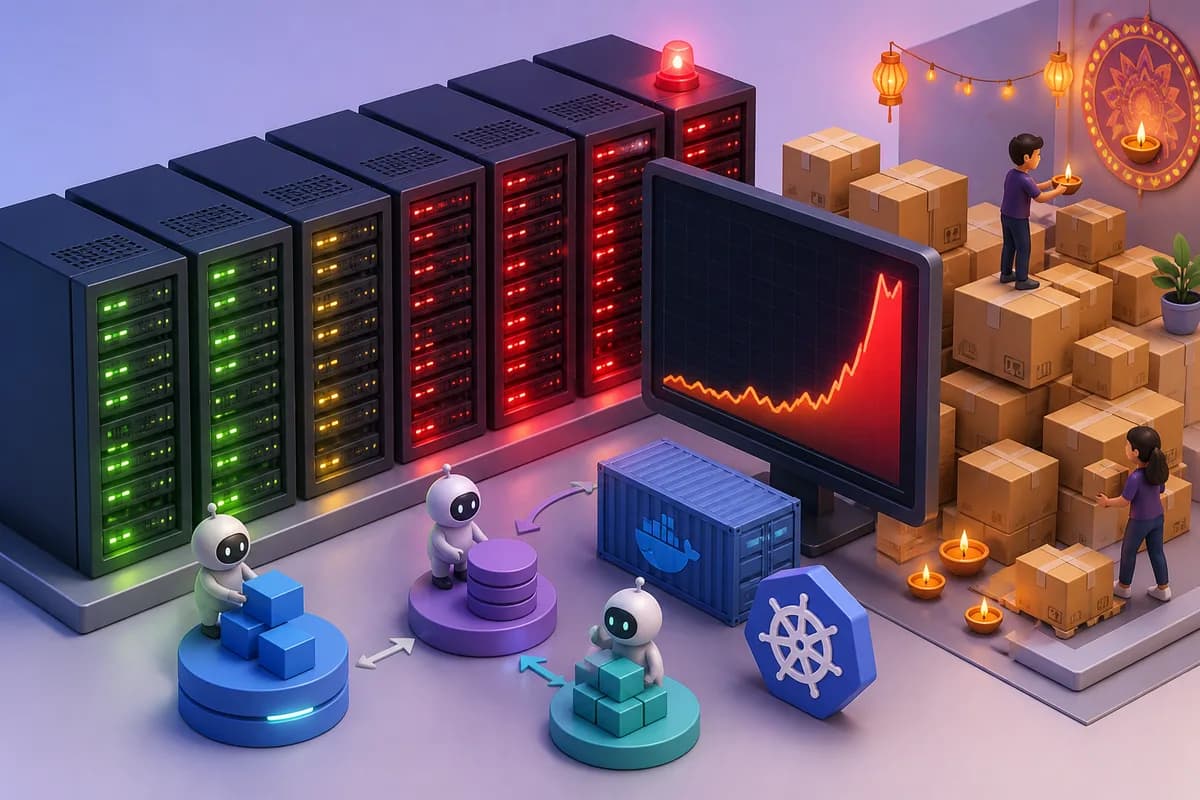
Our checkout service had an HorizontalPodAutoscaler capped at ten replicas, and on a normal day that felt generous. During the Diwali flash sale, traffic tripled in eleven minutes and the HPA dutifully scaled us to the maxReplicas ceiling, yet checkout latency kept climbing.
The replicas were there, but each pod was still starved because its CPU request was sized for average traffic from six months earlier. We were watching the right dashboard for the wrong signal, replica count looked healthy while the actual bottleneck was per-pod resource sizing.
In the rest of this story
- Three Dials, Not One
- Wiring HPA for Real Traffic, Including Scale to Zero
- Letting VPA Fix the Sizing Problem HPA Can't Touch
- Where Event-Driven Scaling Fits, Carefully
- The Production Checklist We Wish We Had Before the Sale
Member-only story
Checking your membership…
Members read every Tech Buzz story in full, with code examples, audio and the discussion, plus every course, quiz and interview set in the Learning Dashboard.